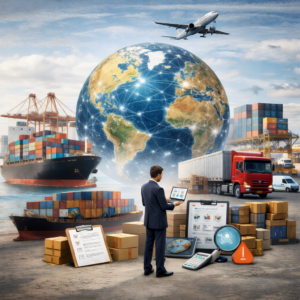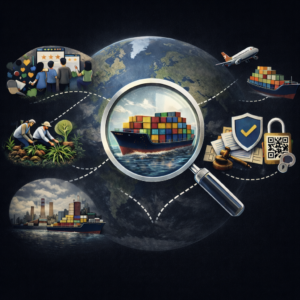
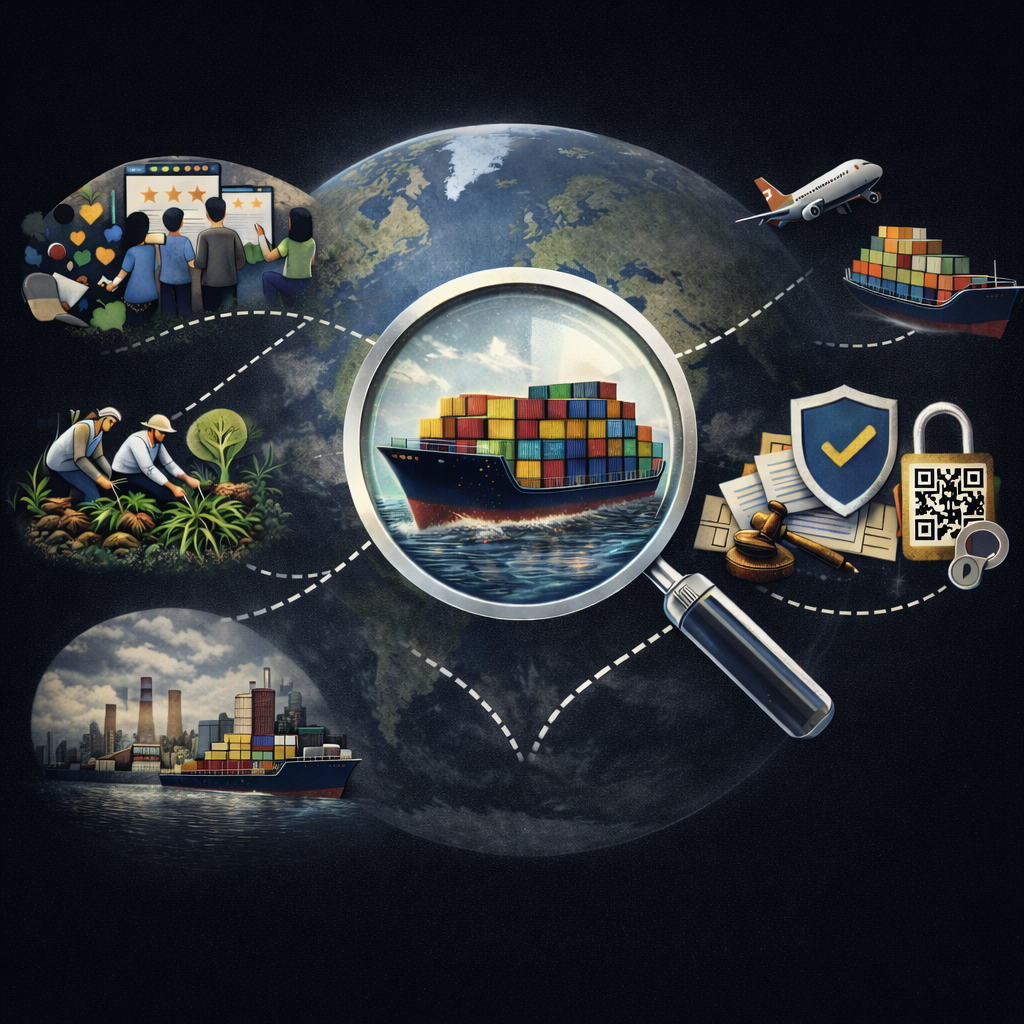
Global trade has changed. What was once dominated by price and production capacity is now dictated by something much stronger: trust.
In 2026, transparency and traceability are no longer optional advantages; rather, they are the basic building blocks of requirements. Buyers from different industries require clear visibility into product origin, make, and whether products have met ethical, environmental, and regulatory criteria.
To exporters, this shift is not a trend. It’s the new baseline.
What Do Transparency and Traceability Really Mean?
Though often used together, they serve different functions:
- Transparency refers to open communications, rigorous documentation, truthful timelines, correct certification, and complete disclosure of sourcing practices.
- Traceability means being able to trace the passage of a product, from a raw material through manufacturing to shipment, based on adequate records and verification mechanisms.
Together, they create accountability across the supply chain.
Why They Have Become Non-Negotiable
There are many reasons why transparency and traceability cannot be compromised in today’s world.
1. Much More Stringent International Regulations
Governments worldwide are upping supply chain legislation. From the EU’s due diligence directives to the evolving import compliance in the US and UK, buyers today need to verify sourcing standards more than ever. Non-documenting exporters lose serious buyers.
Without traceability:
- Shipments can be delayed
- Goods may be rejected
- Fines and penalties can occur
- Market access can be restricted
2. ESG and Sustainability Expectations
In this instance, ESG compliance is absorbed into corporate strategy. Brands are expected to prove responsible sourcing by investors, stakeholders, and consumers alike.
Traceability allows:
- Proof of sustainable materials
- Verification of ethical labour practices
- Accurate carbon footprint assessments
- Certification compliance (GOTS, GRS, ISO, Oeko-Tex, etc.)
Sustainability claims have no credibility without traceability.
3. Risk Mitigation in a Volatile World
Supply chains are increasingly exposed to geopolitical tensions, material shortages, and freight disruptions. In uncertain markets, visibility equals stability.
Transparent communication and real-time traceability help:
- Identify bottlenecks early
- Prevent production delays
- Minimise operational surprises
- Improve contingency planning
4. Stronger Buyer Confidence and Long-Term Contracts
Where the processes and documentation are transparent, buyers have a better understanding that would instil trust.
Trust leads to:
- Repeat orders
- Larger order volumes
- Multi-year agreements
- Collaborative product development
Transparency transforms transactional relationships to strategic partnerships.
The Competitive Advantage of Being Transparent
Many suppliers still operate with minimal documentation and reactive communication. Exporters that place high importance on structured documentation systems, ERP tracking, and proactive reporting immediately differentiate themselves.
In global trade today:
- Speed wins attention.
- Quality wins approval.
- Transparency wins trust.
Conclusion: The Future of Trade Is Visible
The days of opaque supply chains are behind us. Buyers demand transparency, documentation, and accountability throughout the entire process.
In short, transparency and traceability are no longer optional competitive enhancements but the fundamental building blocks for sustainable, strong, and scalable global partnerships. Those businesses that invest in their visibility today will shape tomorrow’s international trade landscape.